
Restoring Timber Floors in a Queenslander: The Complete 2026 Brisbane Guide
Last updated: August 2026 · By Dyna Floors — QBCC 15343047, ATFA accredited
Most Queenslander floors can be fully restored rather than replaced — even after decades under carpet, lino or paint. Restoration typically involves repairs, gap filling, a heavy sand back to fresh timber and a modern coating system, and for most Queenslanders it sits at the upper end of Brisbane's $45–$90/m² sanding range because of the extra repair and preparation work these older floors need.
We've restored original floors across Brisbane's Queenslander belt — Paddington, Ashgrove, Bardon, Hawthorne and beyond — since 2012, backed by more than 20 years in the trade. This guide covers what's actually under your feet, what restoration involves, and the decisions that make or break the result.
What's under the carpet in a Queenslander
Most Queenslanders and post-war Brisbane homes were floored in hoop pine — a beautiful, honey-toned softwood that was milled from old-growth timber and is irreplaceable today — or in hardwoods like spotted gum, blackbutt, brushbox and ironbark. If your home is pre-1960s, there's a fair chance the boards under the carpet have never been polished in their life, or were last done generations ago.
That timber is an asset. Boards of that age and quality can't be bought new — which is exactly why restoring them nearly always beats covering or replacing them.
Why Queenslander floors are a different job to a modern house
An 80–120-year-old floor comes with things a 1990s slab-on-ground home never sees:
Gaps between boards. Queensland timber has been expanding and contracting through a century of summers. Gaps get assessed board by board — some are punched and filled, some are best left to let the floor breathe.
Layers of old coatings. Paint, shellac, old solvent finishes, lino glue, carpet underlay residue — all of it has to be ground off before the timber sees daylight. This is what pushes a Queenslander into a heavy restoration.
Nail heads and repairs. Old boards were secret-nailed or top-nailed and the heads sit proud after decades of movement. Every nail gets punched below sanding depth before a machine touches the floor.
Water and borer damage. Around old bathrooms, verandah edges and under pot plants. Damaged boards are cut out and replaced with matching recycled timber, not left to telegraph through your new finish.
Limited sands left in the boards. Tongue-and-groove boards only have so much timber above the tongue. A floor that's been sanded aggressively before may have one good sand left in it — which is why it should be done properly, once, by someone who checks board depth before starting. This is the single biggest reason not to give an original Queenslander floor to the cheapest quote.
What restoration actually involves
Inspection and board check — condition, depth left in the boards, repairs needed, moisture readings around wet areas. This is where we confirm your sanding category (nearly all Queenslanders are a standard or heavy restoration) and your firm price.
Repairs first — board replacement with matching timber, re-nailing, punching, gap filling where it's right for the floor.
The heavy cut — grinding off paint, glue and old coatings down to clean timber. We run Lagler machines with Festool dust extraction, which keeps the dust of a 100-year-old floor out of the rest of your house.
Fine sanding and detail work — edges, corners, and staircases (priced per riser/tread — old Queenslander stairs are handwork, not machine work).
Finish — this is the decision that sets the character of the whole house, covered next.
Choosing a finish for an original timber floor
The finish question matters more on old timber than anywhere else, for two reasons: hoop pine turns honey-amber under solvent finishes and stays paler under water-based ones, and character homes are usually lived in through the job — so odour and re-entry time matter.
Water-based, non-toxic systems — our specialty. We use Bona, Berger Seidle, Loba and AquaGOLD — low-odour, low-VOC systems that are safer for kids, pets and anyone with asthma, keep the timber's natural tone, and get you back on the floors sooner. Berger Seidle's certified non-toxic range — the proof behind the "non-toxic" promise, not just the label. See our non-toxic finishes page for the full range.
Lime washing and staining — lime wash is hugely popular in Queenslanders for its coastal, whitewashed look on pine; stains can even out mixed or patched boards. Adds $20–$45/m² depending on the system.
Traditional solvent polyurethane — the classic deep amber Queenslander look, at the cost of strong odour and longer out-of-house time. We'll tell you honestly whether your boards suit it.
There's no single right answer — there's the right answer for your boards, your household and the look you're after, and that's a conversation we have at quote stage with samples on your actual timber.
What does it cost and how long does it take?
Queenslander restorations follow the same pricing structure as our Brisbane floor sanding cost guide: $45–$90/m² across Brisbane, with full restorations usually in standard-to-heavy territory because of repairs, old coatings and prep. Staircases are quoted separately per riser/tread.
On timing: restorations generally take longer than a standard sand — repairs, grinding off old coatings, staining and curing all add time, and every floor is different. We treat any day-count as a general guide and confirm your actual timeframe at quote stage — with a century-old floor, we'd rather do it properly than rush it to hit a number.
Frequently asked questions
Can floorboards under old carpet or lino be restored?
Almost always, yes. Carpet and lino usually protect the boards underneath. Glue residue and underlay staining grind off during the heavy cut. The main question is board depth — which we check before quoting.
Is it cheaper to restore Queenslander floors or replace them?
Restoring is nearly always cheaper — and the original old-growth timber in a Queenslander can't be bought new at any reasonable price. Replacement only enters the conversation when boards are structurally gone.
Should the gaps between old floorboards be filled?
Some, not all. Wide gaps that catch dirt and draughts are punched and filled; fine seasonal gaps are often best left so the floor can move naturally. Filling every gap in an old floor that still moves is how fills crack out within a year — we assess it board by board.
Do hoop pine floors sand well?
Beautifully, but they're softer than hardwood and less forgiving of aggressive sanding — and many have limited timber left above the tongue. They need a measured cut and an operator who checks depth first. Done right, restored hoop pine is one of the best-looking floors in Brisbane.
Can we live in the house during restoration?
Usually, with the work area off-limits. With our non-toxic, low-odour systems it's far more manageable than with solvent finishes — one of the main reasons Queenslander owners choose them. We'll map out room-by-room timing at quote stage.
What finish looks right on a Queenslander?
Lime wash and natural-tone water-based finishes are the popular classic looks on pine; solvent polyurethane gives the traditional deep amber. It depends on your boards and your taste — we bring samples and test on your actual timber.
Talk to a Queenslander floor specialist
Photos of your floor and a rough size is all we need to start — call 0468 410 607 or use the quote form. Free quote by a qualified floor tradesman, QBCC licence 15343047, and honest advice on whether your boards are worth restoring (they nearly always are).
★★★★★ 5.0 from 20 Google reviews · Servicing Brisbane's Queenslander suburbs since 2012 — Paddington, Ashgrove, Bardon, Hawthorne, Toowong, Kangaroo Point and across the city.
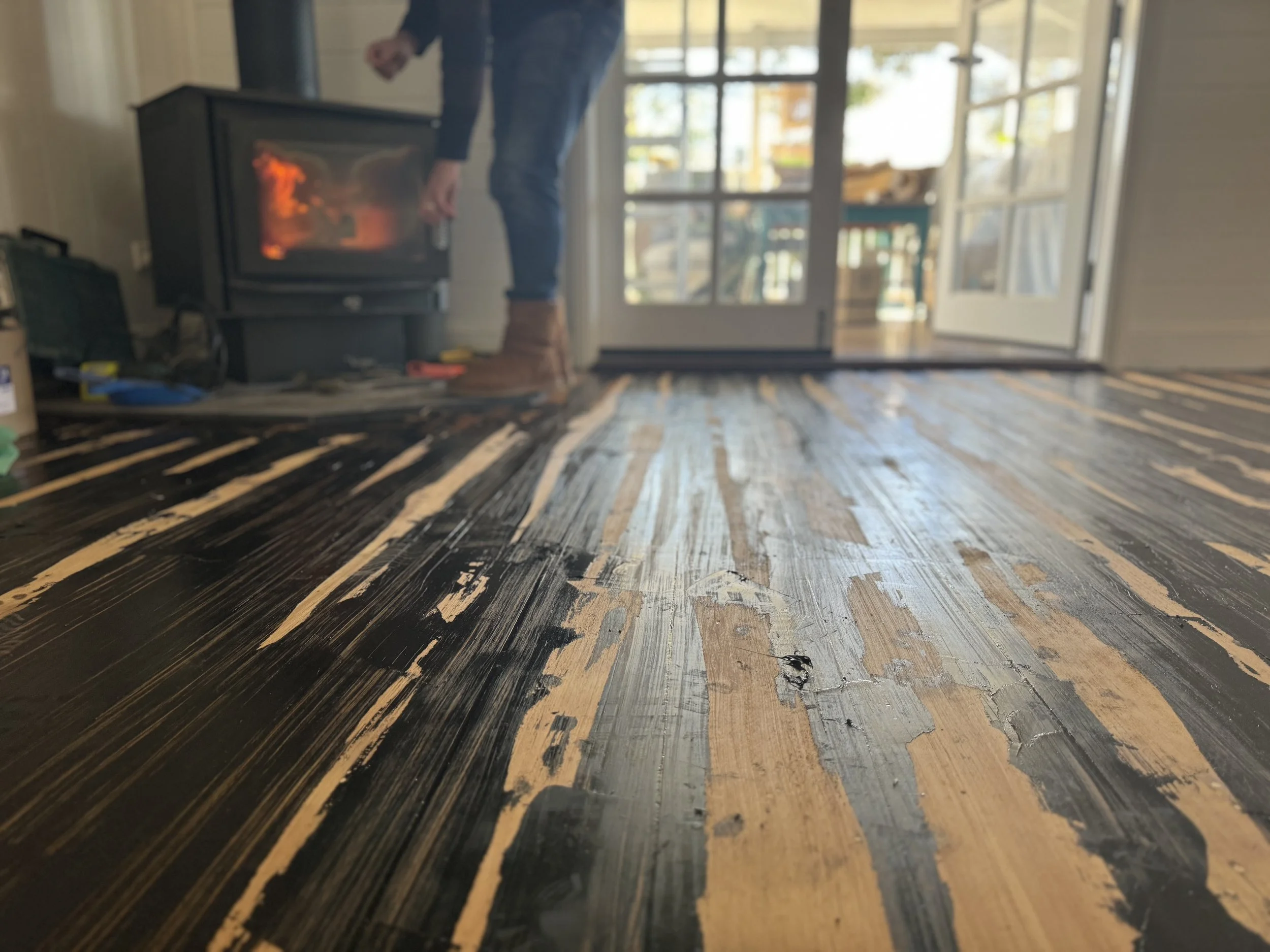
Before — decades of wear and old coatings on original timber boards, Brisbane home
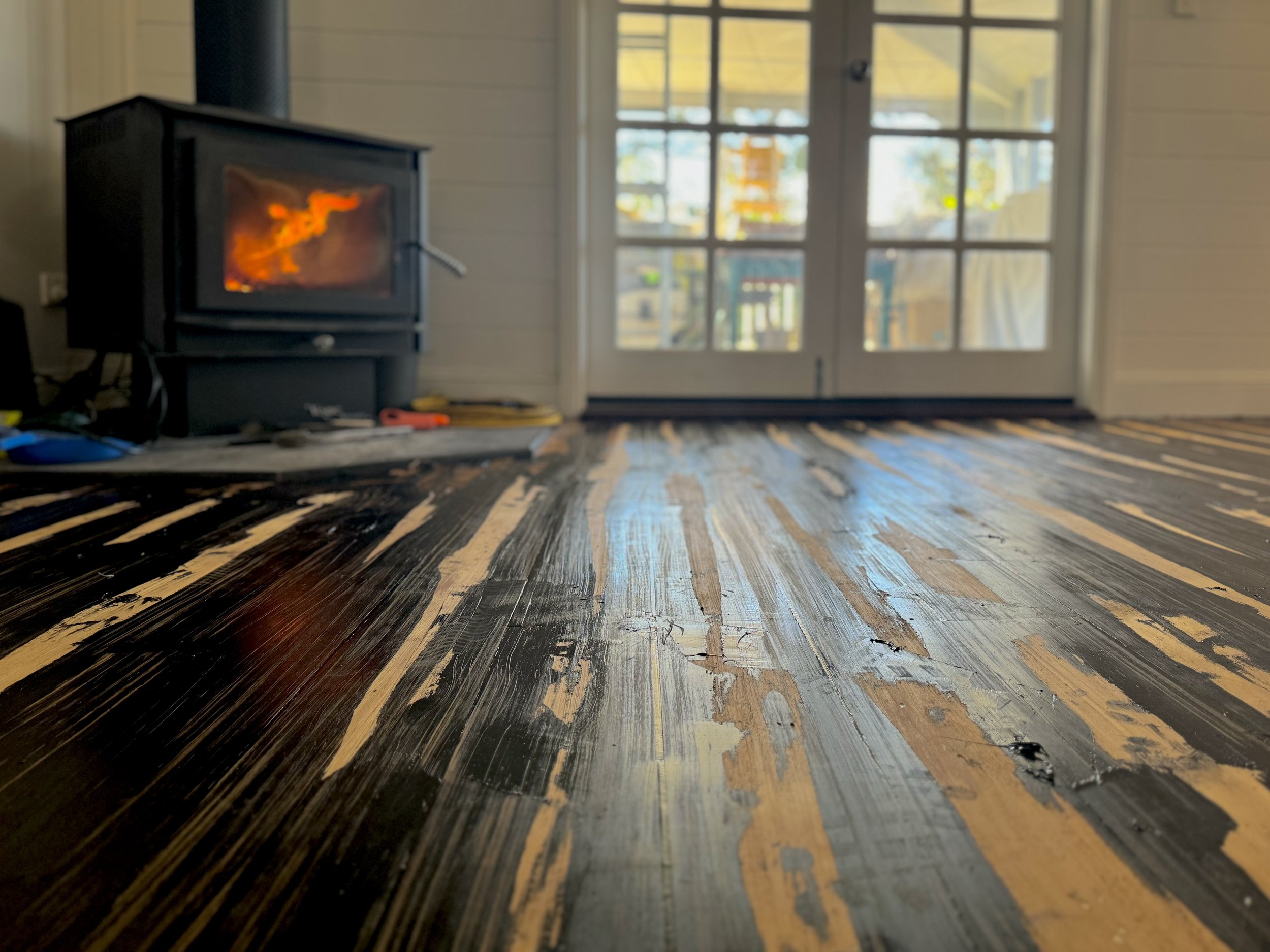
During — heavy sand and gap filling in progress, same floor
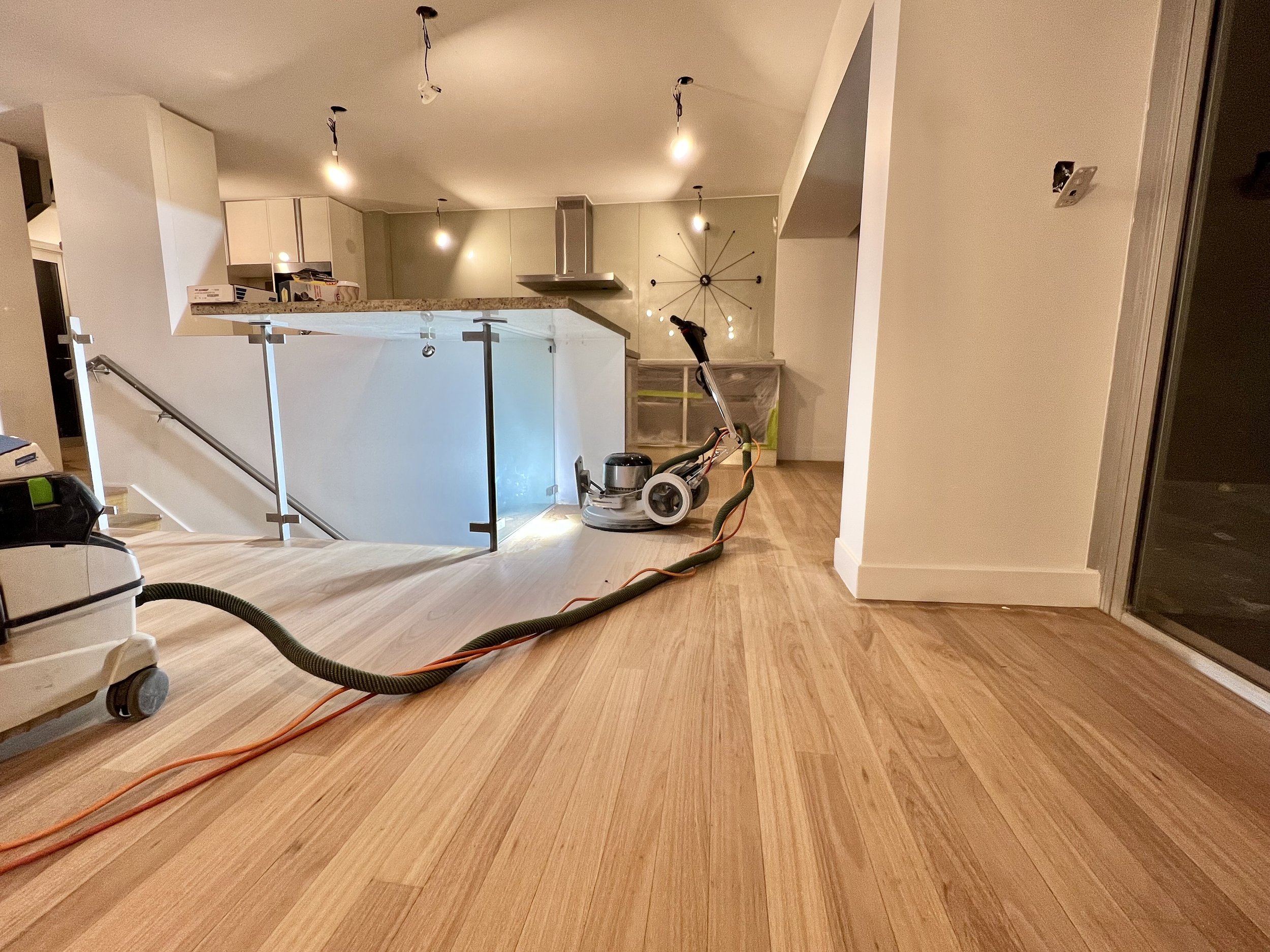
Bona sander with dust extraction on the job — Bardon, Brisbane
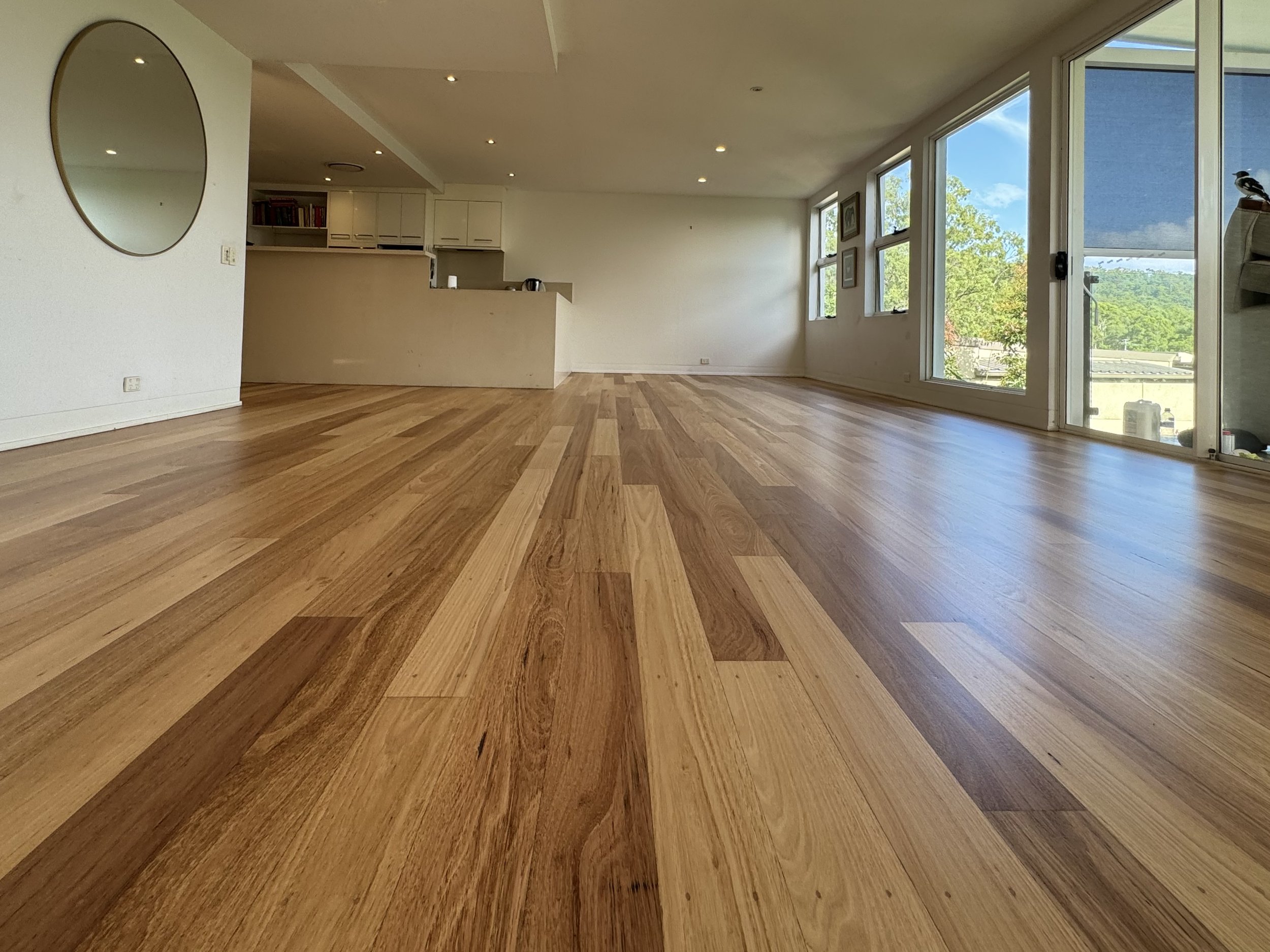
Restored timber floor, water-based satin finish — Taringa, Brisbane